
December 9, 2025
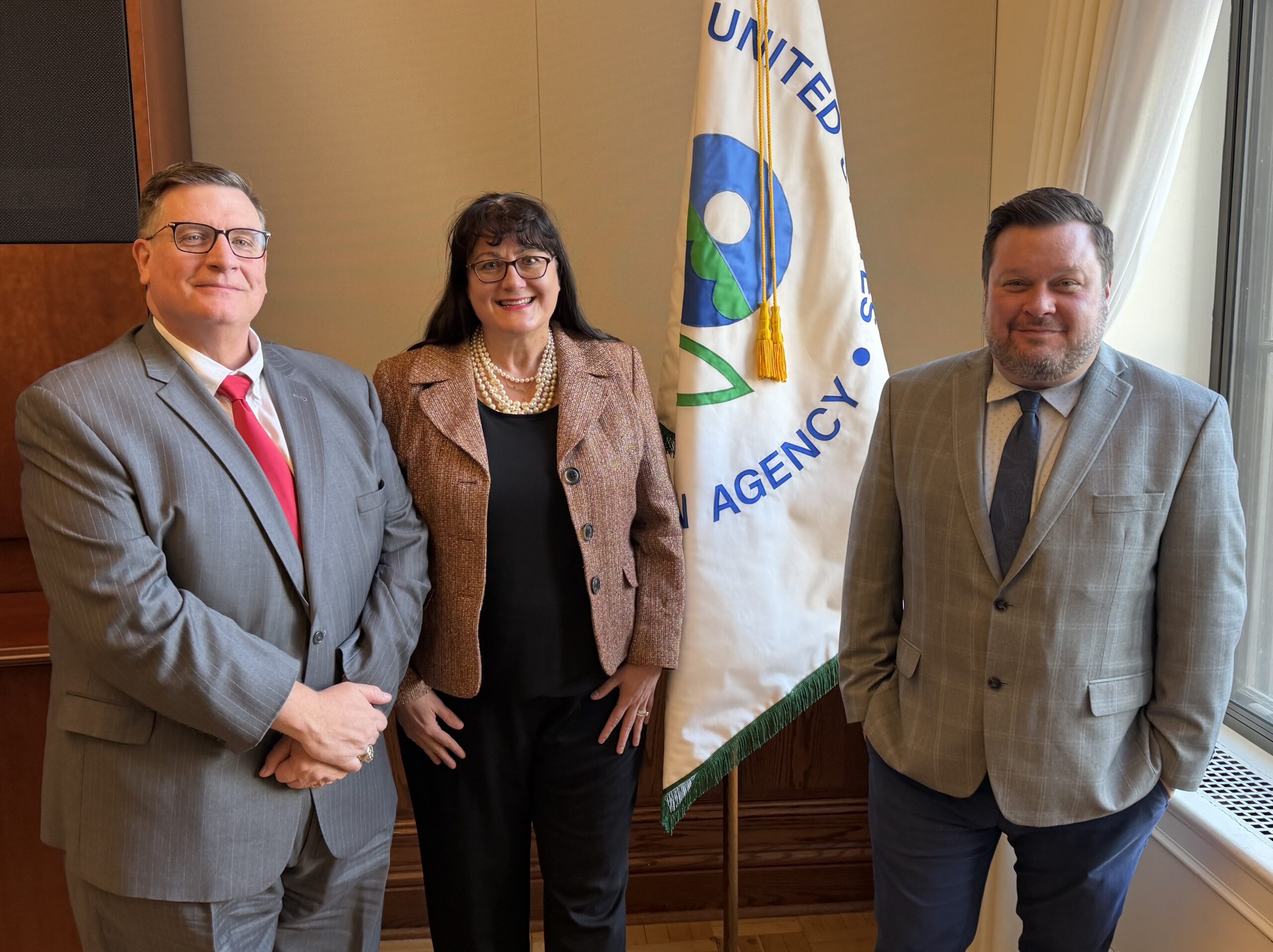 The NARPM team recently met with EPA senior leadership to discuss the agency’s 2022 withdrawal of FAQ’s related to lead certification issues for property managers. This is the second such meeting; it builds on a meeting held earlier this year with program staff. Participating in the meeting for NARPM were CEO Troy Garrett, Monica Gilroy Esq., EPA Consultant Ken Wagner, and Governmental Affairs Director Tyler Craddock. This is the latest in our efforts to gain reinstatement of the common sense “Safe Harbor” Guidance that existed prior to 2022 exempting Property Management Companies when they utilize a Certified Renovator as defined by the Renovation, Repair, and Painting (RRP) Rule.
By way of background, the Renovation, Repair and Painting (RRP) rule was promulgated in 2010. EPA began requiring in-house maintenance teams to be certified and requiring that vendors be certified if they do any work that disturbs paint. At that time, as long as the Property Management Company (PMC) did not do the work with their own staff and hired certified vendors, they were not responsible for the work performed or following the RRP Rules.
In order to assist the public, Frequently Asked Questions (FAQs) regarding PMC’s and RRP were published on March 22, 2018. In 2022, the Environmental Protection Agency (EPA) effectively changed the rules for property managers by withdrawing answers to FAQ’s on their website that stated if PMC’s hire firms or persons certified to perform certain work on pre-1978 housing, then they (the PMC) do not have to be certified.
Specifically, EPA withdrew 2 FAQs that had previously been issued. The first FAQ reinforced EPA’s prior statement that a PMC did not need to obtain firm certification for itself or renovator certification for an employee if none of its employees ‘do the work’ of the renovations. The second FAQ explained how the EPA would exercise its enforcement discretion when a certified firm hired by the PMC fails to comply with a requirement of the RRP rule.
The net effect of this action is that it expands the pool for whom certification is required to include, in some instances, PMC’s. The EPA has always held that a PMC actually doing work that disturbs paint in a pre-1978 dwelling must be certified. Now, however, EPA has expanded that to include PMC’s performing other duties associated with such work. The expanded list includes:
- Soliciting and evaluating contractor bids
- Applying for permits, as appropriate
- Granting contractors access to the property
- Overseeing contractor work on the property
- Informing tenants of renovation activity
- Verifying completion of renovation activity
- Remitting payment to the contractors
We will continue to press forward for both an administrative and legislative solution on this issue reflecting our position that if a PMC does this work itself, then the PMC should certainly be certified and should employ a certified renovator, but if a PMC hires a licensed, certified contractor for a job, the PMC should not need to be certified. This is like hiring a licensed electrician, attorney, or surveyor—none of these require the PMC to have a license or certification for the service. Furthermore, according to EPA’s interpretation, an owner managing their own properties does not need to be certified if that owner hires a licensed, certified firm. Therefore, a PMC acting as the owner’s agent should also not need certification.
The EPA’s current stance imposes an unnecessary regulatory burden on PMCs that hire licensed, certified contractors. The responsibility for certification and enforcement should lie with the contractors performing the work, not with the owner’s agent, and NARPM will keep working to reverse what the EPA has done.
.
Copyright © 2026 National Association of Residential Property Managers®. All Rights Reserved. Do not reprint without permission.